Nature-Washing in Glamping: Why Beautiful Cabins Don’t Always Create Restful Stays
Premium Glamping Cabins - Why Beautiful Design Is Not Enough
For operators choosing premium glamping cabins, the question is no longer only whether the space looks beautiful online. The more important question is whether it feels warm, quiet, fresh, solid and restorative once the guest is inside.
For many retreat owners, glamping site owners and landowners, the idea usually begins with a simple vision.
A beautiful cabin.
A quiet setting.
Guests waking up to trees, birdsong, misty mornings and a slower pace of life.
It is easy to see why nature-based accommodation has become so appealing. People are actively looking for places where they can pause, sleep better, reconnect and feel away from the noise of everyday life.
But there is an uncomfortable truth within the growing glamping and retreat market.
Not every cabin placed in nature is truly designed to help someone rest.
A space can look beautiful online and still feel cold, noisy, synthetic or unsettled once the guest arrives.
A woodland photograph can win the first booking.
But the feeling of the stay is what determines the review, the recommendation and whether that guest ever comes back.
This is where nature-washing begins.
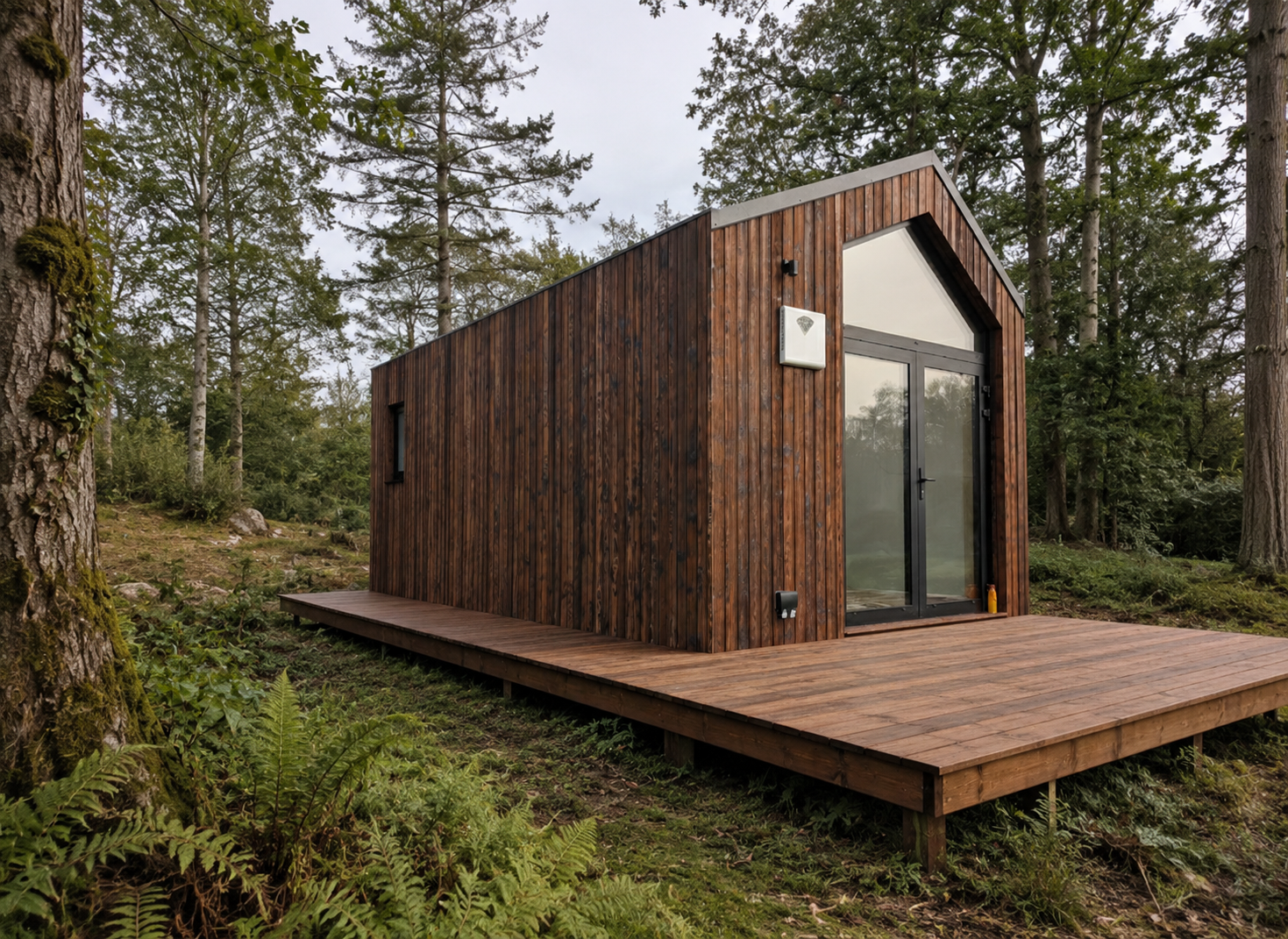
Nest 1 Bed Cabin
What is nature-washing?
Nature-washing is when a space borrows the beauty of its surroundings but fails to deliver the comfort, calm and quality the guest came for.
It is the cabin tucked between trees, photographed beautifully at golden hour, with a headline promising reconnection and rest.
But once inside, the experience tells another story.
Plastic-heavy interiors.
Thin, flimsy walls.
Cold floors.
Unstable temperatures.
Noise from outside.
Stale morning air.
That slight shake underfoot when someone moves across the room.
The setting may be natural, but the space itself does not feel restorative.
And for guests paying for a premium nature stay, that gap matters.
They are not simply buying a view. They are buying the promise of how that stay will make them feel.
Why this matters for retreat and glamping owners
Many glamping site owners start with a strong vision.
Their location is beautiful. They’ll plan high quality photography. They’ll even spend a fortunate on a website that feels calming. The cabins they’ve seen look stylish enough to attract attention.
This can work well in the beginning.
But over time, operators often discover that style alone does not protect the guest experience.
A guest may forgive a simple space if the price is low. But when the stay is positioned as premium, restful, romantic or wellness-led, expectations rise.
If the cabin feels damp, cold, noisy or temporary, the guest feels the disconnect quickly.
This becomes a commercial issue, not just a design issue.
Because when the stay does not match the promise, operators are forced to keep chasing new bookings through advertising, discounts and seasonal promotions. The site may still look good online, but the experience is not strong enough to create natural loyalty.
A truly comfortable cabin does something different.
It gives guests a reason to return because they remember how they felt when they stayed there.
The view may win the booking, but comfort wins the return
Booking.com for Business surveyed UK and US business travellers in 2025. In the UK, 49% of business travellers requested better temperature regulation to help them sleep better in hotels. Across respondents, 48% wanted better mattress or bedding quality, 48% preferred a quieter environment, and 47% wanted better lighting control or blackout curtains.
This is especially relevant in the UK, where temperature and comfort can change dramatically across the year. Loughborough University research found that warmer night-time bedroom temperatures during a hot week were associated with reduced reported sleep quality and thermal comfort, and increased sleep disturbance.
For premium cabins, year-round comfort is not simply a technical upgrade; it is part of the guest experience.
Not all glamping cabins are created equal
From a distance, many cabins look similar.
Timber cladding. Large windows. A deck. A view. A few lifestyle images. Perhaps a hot tub or a firepit.
But for retreat owners and glamping site owners choosing new cabins, the more important question is not simply:
Does it look good?
The better question is:
Will it still feel good once the guest is inside, overnight, in every season?
That is where the difference between a scenery-led cabin and a truly premium glamping cabin becomes clear.
A lower-spec cabin may be enough to create a first impression. But a premium guest space needs to feel considered in ways guests may not even consciously notice.
The floor should feel solid.
The temperature should feel stable.
The acoustics should feel calm.
The air should feel fresh.
The materials should feel natural.
The lighting should help the guest slow down.
The space should feel settled, not temporary.
These are the details that turn accommodation into an experience.
What should glamping and retreat owners look for when upgrading cabins?
When researching new glamping cabins, it is natural to start with the visual design.
The shape, the glazing, the exterior finish and the layout all matter.
But if you are creating premium retreat accommodation or upgrading an existing glamping site, comfort should be part of the decision from the beginning.
Here are the areas worth looking at before choosing a new model.
1. Solid floors that feel calm underfoot
Guests notice movement, even when they do not describe it in technical terms.
A floor that flexes or shakes can make a cabin feel temporary. It can quietly undermine the sense of calm, even in a beautiful setting.
A solid floor creates a different feeling.
It makes the space feel grounded, stable and properly built. It gives the guest confidence in the room. It helps the cabin feel more like a boutique hotel suite than a lightweight structure placed in a field.
For premium glamping cabins, this matters.
Luxury is not only what the guest sees. It is what they feel beneath their feet.
2. Quietness that is designed in
Nature is not silent, and it should not be.
Guests may want to hear birdsong, rain, wind through the trees or the softness of the landscape around them.
But unwanted noise is different.
Road noise, neighbouring guests, mechanical hum, harsh rain impact, thin walls or noise from outside can all disrupt the sense of rest.
Research into hotel guest sleep found that poor sleep satisfaction was associated with factors including noisy air conditioning or heating, uncomfortable bedding and other room-related disturbances.
For glamping and retreat settings, this is especially important because the guest often arrives with the expectation of quiet.
A premium cabin should protect the guest from the wrong kind of noise while still allowing them to feel connected to the landscape.
Quiet should not be left to chance.
It should be part of the design.
3. Warmth and comfort across the seasons
A cabin may look beautiful in summer photography.
But the UK hospitality season is not only made of warm evenings and clear skies.
For site owners, the real test is how the cabin feels in March, November, early mornings, wet weekends and colder months.
Does it stay warm?
Does the floor feel cold?
Does it overheat in summer?
Does the temperature drop quickly overnight?
Does the guest have to keep adjusting heaters or opening windows?
Does the space feel comfortable without effort?
Year-round comfort is one of the biggest differences between a seasonal structure and a premium hospitality space.
For glamping owners, this can affect more than the guest experience. It can influence the months you feel confident selling, the type of guest you attract and the price point you can justify.
If a cabin is only comfortable during the easiest part of the year, it limits the opportunity.
4. Fresh air that does not depend on opening a window
Compact spaces need to breathe well.
A cabin can look clean and still feel stale by morning. Guests may not know exactly why a room feels heavy, but they can feel the difference between fresh air and trapped air.
Bedroom air quality research has found that objectively measured sleep quality and perceived freshness improved when CO₂ levels were lower.
For guests, the message is simple.
Fresh air helps a space feel better.
For retreat accommodation, this matters because the whole stay is often built around wellbeing. A room that feels stale, damp or poorly ventilated works against the very experience the guest has booked.
Good ventilation, natural materials and thoughtful design all contribute to a space that feels calm, clean and easier to rest in.
5. Natural materials that continue the connection to nature
A nature stay should not stop at the window.
If the guest arrives expecting woodland, stillness and calm, the interior should continue that feeling.
Natural materials bring warmth, texture and sensory depth. Timber, soft finishes, calm tones and carefully chosen details help a cabin feel more human and more connected to its setting.
Plastic-heavy interiors can create the opposite effect.
They may be easy to wipe down and photograph well at first, but they can make the space feel synthetic, cold or disconnected from the landscape outside.
For retreat owners, this is especially important.
Guests choosing wellness retreats, yoga retreats, spa breaks or nature-based stays are often sensitive to atmosphere. They notice whether a space feels authentic.
They may not analyse the materials, but they will remember whether the space felt calm, warm and considered.
6. Lighting that helps the guest slow down
Lighting is often treated as decoration.
But in a premium retreat cabin, lighting helps shape the rhythm of the stay.
Bright, flat lighting can make a room feel functional. Poorly placed lighting can make the evening feel harsh. A lack of layered lighting can make a beautiful cabin feel unfinished.
A more considered approach helps the guest move naturally from daytime energy into evening calm.
Soft lighting near the bed.
Low-level lighting for night-time movement.
Warmer tones in the evening.
Enough light to feel practical, but not so much that the space loses its stillness.
This is not about adding complexity.
It is about designing a cabin that helps the guest settle.
For existing glamping sites, upgrading is not just about adding more units
Many operators reach a point where they begin looking for new cabin models because their current accommodation no longer reflects the level of guest they want to attract.
Perhaps the first pods helped launch the site.
Perhaps they worked well for a few seasons.
Perhaps they were the right decision at the time.
But as the market matures, so do guest expectations.
A site that wants to attract higher-spending guests, wellness guests, couples, retreat groups or boutique hospitality customers needs accommodation that supports that positioning.
Upgrading is not only about replacing one cabin with another.
It is about lifting the entire guest experience.
Better comfort can support stronger reviews.
Better sleep can support return visits.
Better materials can support a more premium brand.
Better year-round performance can support a longer trading season.
Better design can help the site feel more intentional.
For many glamping and retreat owners, the next stage is not simply “more accommodation”.
It is better accommodation.
For new retreat owners, style is only the starting point
For those at the beginning of the journey, it is easy to be drawn towards the prettiest cabin.
That is understandable.
Design matters. Your accommodation should look beautiful, suit the landscape and attract the right guest.
But style should not be the only filter.
Before choosing a model, ask:
Will guests sleep well here?
Will it feel quiet enough?
Will it feel warm in winter?
Will it feel fresh in the morning?
Will it feel solid and settled?
Will the materials support the nature-based experience?
Will this cabin still feel premium in five or ten years?
Will it help us charge the rate we want to charge?
Will guests want to come back?
These questions are especially important if your site is positioned around wellness, rest, reconnection or premium nature-based hospitality.
Because the more you promise emotionally, the more the building has to deliver physically.
A five-star hotel room, placed quietly in nature
At SOMR, we believe the strongest nature-based stays do not ask guests to choose between comfort and connection.
They should have both.
The feeling should be closer to a five-star hotel room placed quietly in the landscape than a basic cabin relying on a beautiful view.
Solid underfoot.
Quiet inside.
Warm across the seasons.
Fresh in the morning.
Natural in its materials.
Calm in its lighting.
Designed for deeper rest.
This is the difference between a cabin that simply sits in nature and a space that genuinely supports the feeling guests came for.
Because true luxury is not only how a space looks online.
It is how it makes someone feel once the door closes.
Nature-washing vs. restorative hospitality
Nature-washing creates a gap between expectation and experience.
The guest expects calm, but the space feels unsettled.
The guest expects comfort, but the floor is cold.
The guest expects quiet, but outside noise carries through.
The guest expects nature, but the interior feels synthetic.
The guest expects rest, but the building does not support it.
Restorative hospitality closes that gap.
It makes the inside feel as considered as the setting outside.
For retreat owners, glamping owners, hotels and landowners, this is where the opportunity lies.
Not simply creating a stay that looks good in photographs.
Creating a space that guests remember because it helped them feel better.
Final thought
The future of premium glamping and retreat accommodation will not be won by scenery alone.
The sites that stand out will be the ones that understand the full guest experience: how the space looks, how it sounds, how it feels, how it breathes, how it sleeps and how it supports the reason the guest came in the first place.
A beautiful view may create the first booking.
But warmth, quiet, fresh air, solid construction and deeper rest are what help create the return.
That is the difference between nature-washing and a nature stay that truly restores.
Planning a premium glamping site or looking to upgrade your existing accommodation? Explore the SOMR Spaces Collection — designed for deeper rest, year-round comfort and nature-led hospitality.
FAQs
What should I look for when choosing glamping cabins?
Look beyond the exterior design. A high-quality glamping cabin should feel warm, quiet, solid underfoot, fresh in the morning and comfortable across the seasons. Materials, ventilation, acoustics, heating, lighting and floor construction all affect the guest experience.
Are premium glamping cabins worth it?
Premium glamping cabins can support a stronger guest experience, better reviews, higher perceived value and greater confidence across more of the year. For retreat and glamping owners, the value is not only in how the cabin looks, but in how well it supports sleep, comfort and return visits.
Why does cabin comfort matter for retreat owners?
Retreat guests are often booking for rest, wellness, reconnection and recovery. If the cabin feels cold, noisy, stale or flimsy, it works against the purpose of the stay. A retreat cabin should support calm from the inside out.
What is nature-washing in glamping?
Nature-washing is when a cabin or retreat space uses beautiful natural surroundings to sell a restorative experience, but the building itself does not provide the comfort, quality or calm the guest expects.