What Is a Wellness Cabin? The New Standard for Deeper Rest
A wellness cabin is a nature-connected guest space designed to support rest, sleep, comfort and wellbeing. Unlike a standard glamping pod or leisure cabin, it considers the full sensory experience: warmth, quietness, air quality, natural materials, lighting, layout and how easily the guest settles once inside.
There was a time when guest accommodation only needed to do one thing well: provide somewhere pleasant to stay.
A good view, a comfortable bed, a warm shower and a beautiful setting were often enough. For many years, this shaped the way cabins, lodges and glamping spaces were designed. They were created to look inviting, photograph well and offer guests a closer connection to nature.
But guest expectations are changing.
People are no longer looking only for somewhere to sleep. They are looking for somewhere to recover. Somewhere quiet. Somewhere warm. Somewhere that helps them switch off properly, not just step into a better-looking version of their busy life.
This is where the idea of the wellness cabin begins.
A wellness cabin is not simply a cabin with a sauna, a hot tub or a yoga mat placed beside the bed. Those features can be part of the experience, but they are not the foundation of it.
A true wellness cabin is designed around how a guest feels inside the space. It considers sleep, air quality, acoustics, thermal comfort, natural materials, light, layout and connection to nature. It is accommodation designed not only to host the guest, but to restore them.
For landowners, retreat operators, boutique hotels and hospitality destinations, this marks an important shift. The future of premium guest accommodation is not just about how beautiful a space looks on arrival. It is about how deeply it allows someone to rest once they are there.
What is a wellness cabin?
A wellness cabin is a nature-connected guest space designed to support rest, sleep, comfort and emotional wellbeing.
Unlike a standard glamping cabin or leisure pod, a wellness cabin is not designed around appearance alone. It is shaped by the full sensory experience of the guest: how the space sounds, how it feels underfoot, how stable the temperature is, how fresh the air feels, how natural the materials are, and how easily the body settles once inside.
In simple terms, a wellness cabin should help guests feel calmer when they enter, sleep better while they stay, and leave feeling more restored than when they arrived.
That does not happen by accident.
It requires a more considered approach to design and construction. Every element matters, from the building envelope to the finishes, from the glazing to the ventilation, from the floor structure to the way sound moves through the room.
A wellness cabin asks a better question than “Does this look impressive?”
It asks: Will this space genuinely help someone rest?
Why wellness cabins are becoming more important in hospitality
The language of travel has changed.
Guests are increasingly drawn to words like reset, retreat, slow living, switching off, nature escape, wellness weekend and restorative stay. These are not just marketing phrases. They reflect a wider need.
Modern life is noisy, overstimulating and often physically disconnected from nature. Many guests arrive at a rural retreat, hotel garden suite or woodland cabin already carrying stress, poor sleep and mental fatigue. The accommodation they choose is expected to do more than look good in a photograph. It needs to help them feel different.
This is especially true for wellness retreats, spa hotels, boutique hospitality sites and premium glamping destinations. These settings are often selling a promise of calm. The building has to support that promise.
If a guest books a nature-based escape but spends the night too hot, too cold, disturbed by noise, or aware of every footstep on a lightweight floor, the experience begins to break down. The setting may be beautiful, but the body does not fully relax.
That is the difference between accommodation that is simply placed in nature and accommodation that is designed to support rest within nature.
A wellness cabin is not just a cabin with a sauna
One of the most common misunderstandings around wellness accommodation is that wellness begins with add-ons.
A sauna.
A hot tub.
A copper bath.
A plunge pool.
A yoga deck.
An outdoor kitchen.
All of these can elevate a stay. They can create theatre, ritual and a stronger guest experience. They can help a retreat or hospitality site feel more premium and memorable.
But they do not automatically make a cabin wellness-led.
A sauna outside a poorly insulated cabin does not solve a cold night’s sleep. A beautiful bath beside a space that overheats in summer does not create true comfort. A deck overlooking woodland cannot compensate for poor acoustics, stale air or a building that feels temporary.
Wellness starts with the building itself.
The cabin must first be warm, quiet, solid, breathable, comfortable and calm. Only then do the additional wellness features become meaningful. The sauna, decking, outdoor kitchen or bathing area should feel like an extension of the restorative environment, not a distraction from a building that has not been properly considered.
This is why the strongest wellness cabins are designed in layers.
The first layer is performance: thermal comfort, air quality, acoustic softness and structural quality.
The second layer is atmosphere: natural textures, light, proportion, views and stillness.
The third layer is experience: saunas, bathing, outdoor dining, canopies, decks and bespoke wellness rituals.
When these layers work together, the cabin becomes more than accommodation. It becomes part of the guest’s recovery.
What makes a cabin suitable for a wellness retreat?
A cabin suitable for a wellness retreat needs to support the rhythm of rest.
Retreat guests often arrive with a clear intention. They may be coming for yoga, breathwork, meditation, woodland bathing, spa treatments, deep sleep, creative focus or simply time away from the pace of everyday life.
The accommodation should not interrupt that intention. It should hold it.
There are several key ingredients that separate a true wellness cabin from a standard leisure building.
1. Sleep quality
Sleep is one of the clearest measures of whether a guest has truly rested.
A wellness cabin should be designed to support deep, uninterrupted sleep. That means thinking beyond the mattress. The full environment matters.
A room that is too cold, too hot, too noisy or filled with artificial-feeling materials can make it harder for the body to settle. A calm sleep environment should feel stable, cocooning and quiet. It should allow guests to switch off without being aware of draughts, outside noise, mechanical hums or sudden changes in temperature.
For hospitality operators, this matters commercially too. Guests may book because of how a space looks, but they remember how well they slept.
A beautiful cabin may create the first impression. A restorative night’s sleep creates the review.
2. Acoustic calm
Quiet is one of the most underrated luxuries in guest accommodation.
Many rural and nature-based stays are marketed around peace, but the building itself must be able to protect that sense of peace. If rain feels harsh on the roof, wind noise dominates the room, footsteps feel hollow, or external sound travels too easily through the structure, the guest may never fully relax.
Acoustic comfort is not about creating silence in an artificial way. It is about softening the space so the nervous system feels safe.
A wellness cabin should feel acoustically settled. Natural materials, thoughtful construction and careful detailing can all contribute to a quieter, calmer internal atmosphere. The result is a space that feels less sharp, less echoey and less temporary.
For guests seeking rest, this subtle difference can be powerful.
They may not know the technical reason the space feels calmer. They simply feel it.
3. Thermal stability
A wellness cabin needs to feel comfortable throughout the year, not just in mild weather.
This is particularly important in the UK, where guest accommodation may face cold winter mornings, wet autumn weekends, windy hillsides, shaded woodland settings and intense summer sun through glazing.
A cabin that performs beautifully in May may not deliver the same experience in November. Likewise, a space that feels cosy in winter may become uncomfortable if it overheats beside a lake, in an open field or on a south-facing site.
Thermal comfort is central to wellness-led design because the body cannot fully rest when it is fighting the environment.
Guests should not have to constantly adjust heating, open windows to manage stuffiness, add blankets to compensate for cold spots, or avoid parts of the room because of glare or overheating. The best guest spaces feel steady. Warm when they need to be warm. Fresh when they need to be fresh. Comfortable without effort.
That sense of ease is part of the luxury.
4. Cleaner air and good ventilation
Air quality is often invisible, but it has a direct impact on how a space feels.
A wellness cabin should not feel stale, damp or heavy. It should feel fresh without feeling cold. This is where ventilation strategy, material choice and building quality become important.
Good ventilation helps manage moisture, odours and indoor air quality. Low-toxin and natural materials can also contribute to a healthier internal environment, reducing the reliance on synthetic finishes that may not align with a wellness-led setting.
In a retreat or premium hospitality environment, guests may not ask about ventilation systems or material emissions. But they will notice whether a room feels fresh, calm and pleasant to spend time in.
Wellness is often experienced through these subtle details.
The scent of timber.
The absence of stuffiness.
The feeling of clean air after a long walk.
The comfort of waking up without the room feeling damp, stale or overheated.
A well-designed cabin supports these moments quietly.
5. Natural materials
Natural materials play an important role in restorative accommodation.
Timber, natural textures, soft surfaces and carefully chosen finishes can help a space feel grounded and connected to its setting. They also create a different emotional response to plastic-heavy or synthetic interiors.
A wellness cabin should feel as though it belongs in its environment. It should not create a harsh divide between outside and inside. The transition from woodland, meadow, lakeside or garden into the cabin should feel natural and calming.
This is where biophilic design becomes valuable.
Biophilic design is based on the idea that humans feel better when connected to nature. In cabin design, that can show up through natural materials, views, daylight, organic textures, calming colours and a layout that frames the landscape rather than competes with it.
The aim is not to fill a space with rustic decoration. It is to create an environment where nature feels present, even when the guest is indoors.
6. A solid, permanent feeling
A wellness cabin should feel stable.
This is difficult to explain until someone experiences the opposite. In some lightweight leisure buildings, guests can feel movement underfoot, hear hollow sounds through the floor, or sense that the building is temporary. Even when the space looks attractive, the body can register that lack of solidity.
For deeper rest, solidity matters.
A cabin that feels firm underfoot, quiet in the wind and settled in its structure gives the guest a greater sense of ease. It feels less like camping with better interiors and more like a small, beautifully designed building.
For premium hospitality, this distinction is important. Guests paying for a restorative stay expect comfort that feels effortless. They want the closeness to nature without sacrificing the reassurance of a well-built space.
The best wellness cabins offer both.
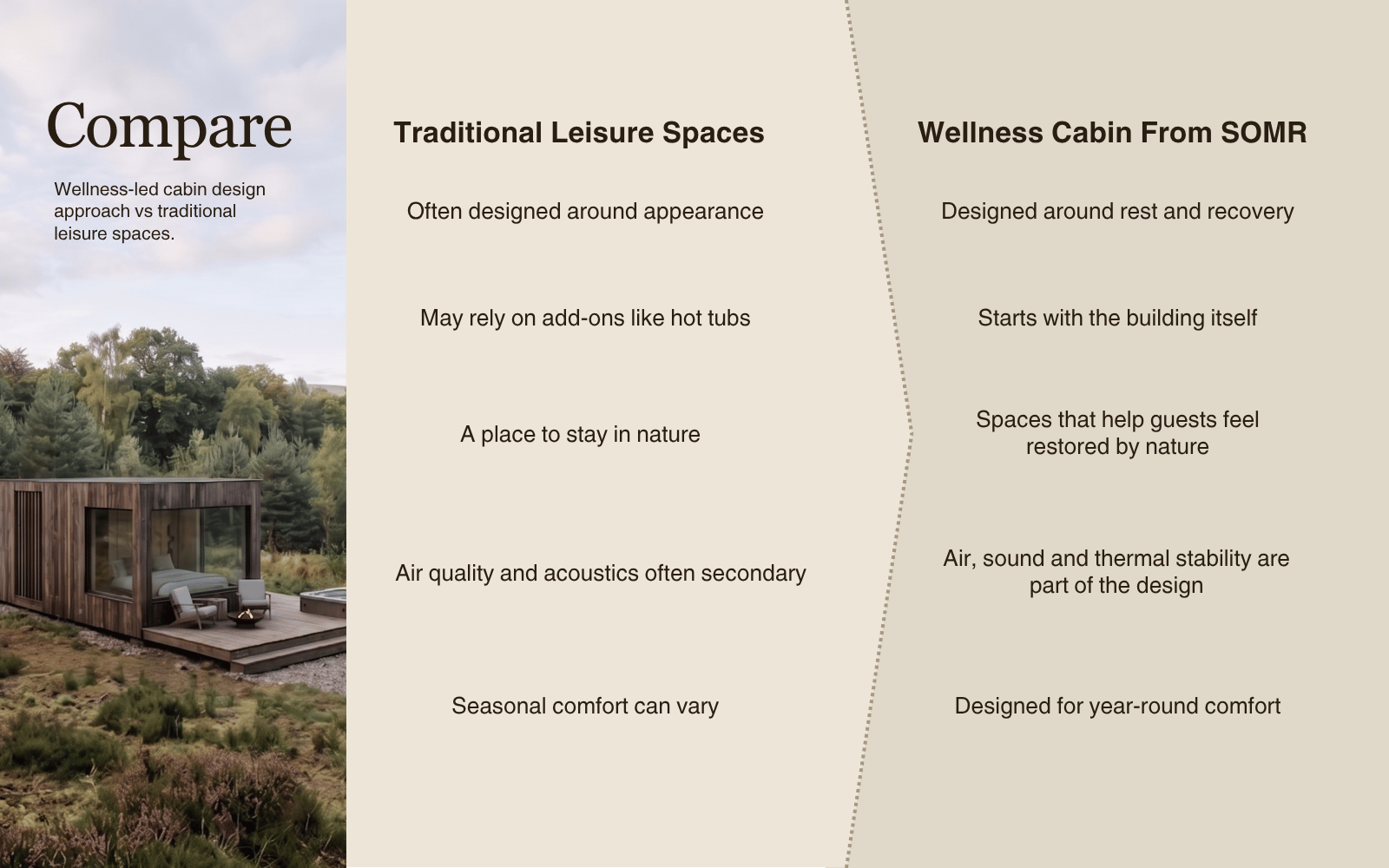
What is the difference between a normal glamping cabin and a wellness-led cabin?
A normal glamping cabin is often designed to create an attractive nature-based stay.
A wellness-led cabin goes further. It is designed to support the physical and emotional experience of the guest.
The difference is not always obvious in photographs. Two cabins may both have large windows, timber cladding, a stylish bed and an outdoor seating area. Online, they may appear similar.
The real difference is felt during the stay.
A standard cabin may focus on visual appeal. A wellness cabin considers comfort after dark, air quality overnight, sound during bad weather, warmth in winter, overheating in summer, the feel of the floor, the calmness of the materials and the way the guest wakes up the next morning.
A standard cabin may provide a place to stay in nature.
A wellness cabin should help the guest feel restored by nature.
That is a much higher standard.
For operators, this matters because the guest experience is what protects long-term value. A beautiful image may win attention, but the quality of the stay determines whether guests recommend, return and remember the destination for the right reasons.
Why the UK climate makes wellness cabin design more important
In warmer, drier climates, a simple cabin can sometimes perform well enough for large parts of the year.
The UK is different.
Hospitality accommodation here needs to deal with moisture, wind, rain, cold snaps, shaded landscapes, exposed hillsides and increasingly warm summer days. A cabin used for premium guest stays must be ready for this variety.
This is particularly important for sites in Scottish forests, coastal locations, open farmland, lakeside settings, valleys and rural estates. These are often beautiful places to stay, but they can be demanding environments for a building.
A wellness cabin should be designed with this reality in mind.
If a guest books a winter retreat, the cabin needs to feel warm and deeply comfortable. If they book a summer lakeside stay, the space needs to manage heat and glare. If they arrive during a stormy weekend, the cabin should still feel calm, secure and restful.
The goal is not simply year-round use from an operator’s point of view. It is year-round comfort from the guest’s point of view.
That distinction matters.
Guests do not want to feel that they are staying in a summer product being pushed into winter. They want a space that feels intentionally designed for the season they are in.
Where do infrared saunas, outdoor kitchens and bathing areas fit in?
Wellness features can be incredibly valuable when they are designed as part of the wider guest experience.
An infrared sauna can extend the feeling of restoration beyond the bedroom. Outdoor decking can create a slower rhythm between inside and outside. A canopy can make the space usable in more weather conditions. An outdoor kitchen can turn a cabin stay into a more complete hospitality experience. A copper bath can create a sense of ritual, warmth and visual theatre.
These features are especially powerful for retreat settings, boutique hotels, wedding venues and premium land-based stays where the guest experience needs to feel memorable and elevated.
But the key is integration.
The outdoor wellness space should feel connected to the cabin, not added on afterwards. The deck, canopy, kitchen, sauna or bathing area should suit the landscape, the guest journey and the commercial positioning of the site.
For some destinations, that may mean a quiet private deck for morning coffee and meditation. For others, it may mean a full outdoor kitchen and bathing area designed for premium weekend stays. For a retreat site, it may mean infrared sauna sessions, cold water rituals and soft evening lighting under a canopy.
The best wellness additions are not generic. They are designed around the way guests will actually use the space.
Who are wellness cabins for?
Wellness cabins are particularly suited to hospitality settings where the guest experience is the product.
They work well for retreat hosts who want accommodation that supports yoga, breathwork, meditation, rest and recovery.
They suit boutique hotels looking to extend into gardens, woodland or unused land without losing the quality of their main guest experience.
They are valuable for spa hotels that want the feeling of relaxation to continue beyond the treatment room.
They can help wedding venues keep more guests on site while offering a more memorable overnight stay.
They also suit landowners who want to create premium accommodation that feels connected to nature, but more refined than traditional glamping.
In each case, the purpose is not simply to add beds. It is to add an experience.
That is why wellness cabins sit in a different category from basic pods or simple holiday cabins. They are for operators who care about how their guests feel, how their site is remembered and how their accommodation performs across more of the year.
What should operators look for in a wellness cabin?
When comparing wellness cabins, it is useful to look beyond the surface.
The visual design matters, of course. Guests need to feel drawn to the space. But operators should also ask deeper questions about comfort, durability and guest experience.
Consider:
Does the cabin feel suitable for year-round use?
How does it manage heating, ventilation and summer comfort?
What materials are used internally?
Does the space feel acoustically calm?
Is the building solid underfoot?
Are the wellness features integrated or simply added on?
Does the cabin support the type of guest you want to attract?
Will the building still feel premium after repeated commercial use?
Does the design encourage rest, privacy and connection to nature?
These questions help separate visual wellness from genuine wellness.
A wellness cabin should not rely on styling alone. It should be built around the conditions that allow people to slow down, sleep well and feel restored.
The future of restorative guest accommodation
The future of premium accommodation will not be defined by appearance alone.
Beautiful design will still matter. Guests will always be drawn to spaces that feel considered, elegant and connected to their surroundings. But the next standard of hospitality will go deeper.
The strongest guest spaces will be those that support the whole experience: the arrival, the first breath inside, the quietness at night, the warmth in winter, the freshness of the air, the softness of the acoustics, the view from the bed, the ritual of stepping outside, and the feeling a guest carries home.
That is the real promise of a wellness cabin.
Not just a better-looking place to stay.
A better-feeling place to rest.
For retreat operators, hoteliers, landowners and hospitality destinations, this is where the opportunity sits. Guests are looking for spaces that help them recover from the pace of modern life. They want nature, but they also want comfort. They want simplicity, but not compromise. They want beauty, but they also want to sleep deeply.
A wellness cabin brings those needs together.
It is nature-connected accommodation designed with more care, more intention and more responsibility. It recognises that comfort, quality and wellbeing are not trends. They are becoming part of what guests expect from truly premium stays.
Explore the SOMR Spaces Collection
At SOMR Spaces, we create wellness-led cabins and restorative guest accommodation for retreat hosts, boutique hospitality settings, wedding venues and landowners with a vision for premium nature-connected stays.
Our approach is built around deeper rest, year-round comfort, natural materials, acoustic calm and high-performance design — with optional wellness additions such as infrared saunas, outdoor kitchens, canopies, bespoke decking and bathing areas available to elevate the guest experience even further.
Explore the Collection to discover cabin spaces designed not just to look beautiful, but to feel restorative from the moment your guests step inside.
FAQ
What is a wellness cabin?
A wellness cabin is a nature-connected guest space designed to support rest, sleep, comfort and wellbeing. It usually considers thermal comfort, air quality, acoustic calm, natural materials, light, layout and connection to the surrounding landscape.
What makes a cabin wellness-led?
A cabin becomes wellness-led when the design supports how guests feel, not just how the space looks. Key features include good ventilation, stable temperatures, quiet interiors, natural materials, comfortable sleeping areas and design choices that encourage rest and recovery.
Is a wellness cabin the same as a glamping pod?
No. A glamping pod is often a compact, nature-based place to stay. A wellness cabin is designed more intentionally around guest wellbeing, including sleep quality, air quality, acoustic comfort, thermal performance and restorative design.
Does a cabin need a sauna to be a wellness cabin?
No. A sauna can enhance the wellness experience, but it does not define it. A true wellness cabin starts with the building itself: comfort, quietness, air quality, natural materials and a calm atmosphere.
Who are wellness cabins suitable for?
Wellness cabins are suitable for retreat sites, boutique hotels, spa hotels, wedding venues, rural estates, eco resorts and landowners creating premium guest accommodation.
Why are wellness cabins useful for year-round stays?
Wellness cabins are usually designed with better thermal comfort and guest experience in mind, making them more suitable for autumn, winter and spring stays than basic seasonal accommodation.